
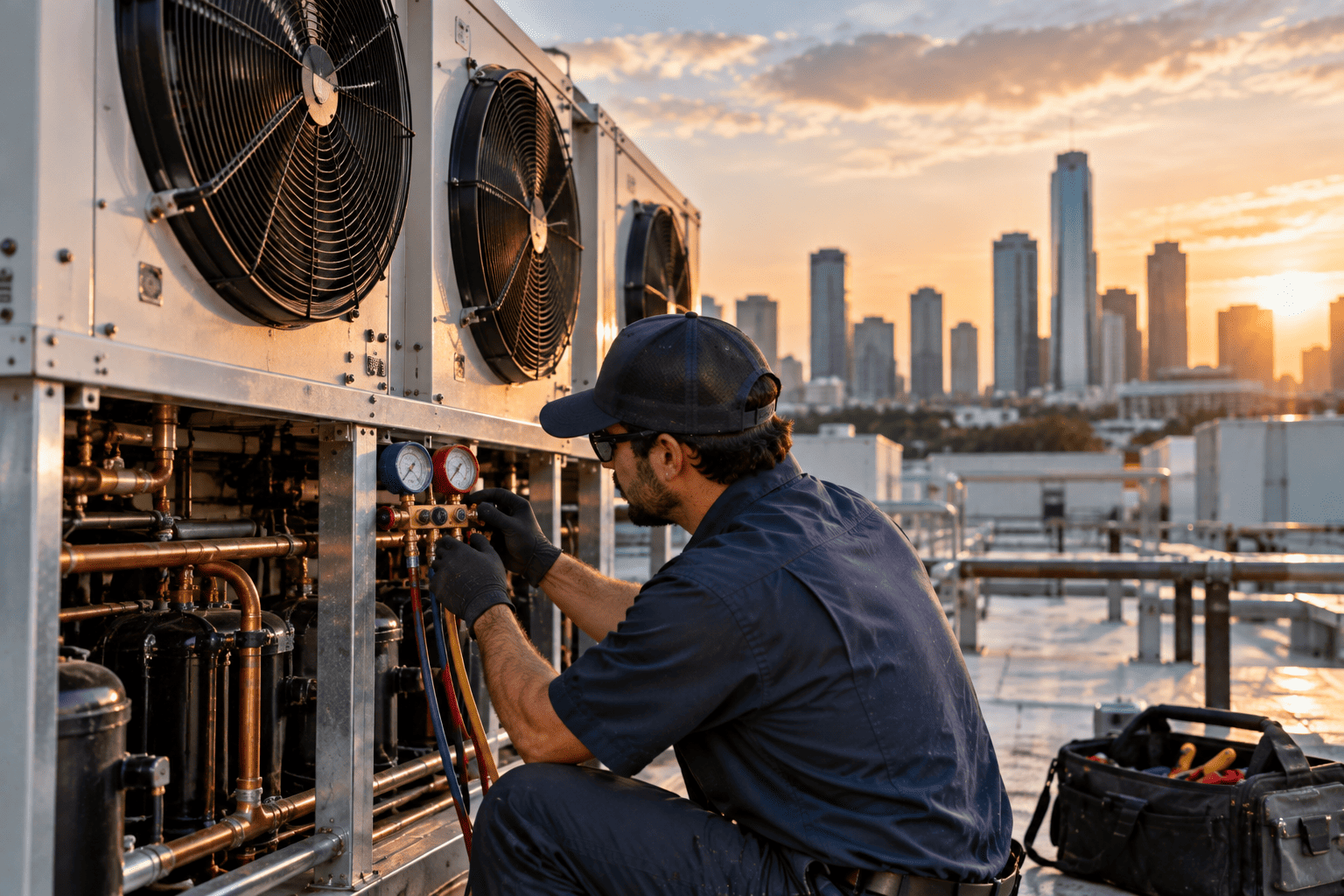
Houston businesses depend on commercial and industrial refrigeration systems to maintain product temperatures, protect inventory, and keep operations running. When head pressure rises above the equipment’s intended operating range, compressors can experience greater workload, high discharge temperatures, repeated high-pressure shutdowns, and reduced refrigeration reliability. For facilities searching for Commercial HVAC & Industrial Refrigeration Services in Houston TX, ACF Mechanical provides professional refrigeration diagnostics to identify condenser, airflow, refrigerant, electrical, control, and heat-rejection problems that can contribute to abnormal high-side pressure.
High head pressure is not a diagnosis by itself. It is an operating condition that can result from several different problems. Simply resetting a high-pressure control or changing the refrigerant charge without identifying the cause can leave the actual problem unresolved. Accurate troubleshooting requires evaluating the complete refrigeration system and comparing operating conditions with equipment specifications.
What Is Head Pressure in a Refrigeration System?
In refrigeration service, “head pressure” commonly refers to pressure on the high side of the system, particularly the condensing side.
The compressor receives lower-pressure refrigerant vapor from the suction side, compresses it, and sends higher-pressure vapor toward the condenser. The condenser then rejects heat and condenses the refrigerant into liquid.
Several related terms may appear during diagnosis:
- Suction pressure: Pressure on the low side entering the compressor.
- Discharge pressure: Pressure leaving the compressor.
- Condensing pressure: Pressure associated with refrigerant condensation in the condenser.
- Head pressure: Common service term generally referring to high-side or condensing pressure.
These terms should not always be treated as identical measurements at every location because pressure drops can occur through components and piping.
Professional commercial refrigeration head pressure troubleshooting Houston TX considers both measured pressure and the operating conditions that produced it.
Why High Head Pressure Matters
The compressor must move refrigerant from the lower-pressure suction side to the higher-pressure discharge side.
When condensing pressure becomes abnormally high, the compressor may have to work against a greater pressure difference.
Depending on system design and severity, high head pressure can contribute to:
- Increased compressor workload
- Higher electrical demand
- High discharge temperature
- Reduced refrigeration efficiency
- High-pressure safety trips
- Compressor overheating
- Repeated equipment shutdowns
- Reduced cooling reliability
- Potential compressor stress
A single high-pressure trip does not automatically mean that the compressor has been damaged. However, repeated trips should not be ignored.
Common Signs of High Head Pressure
Facility managers may first notice the consequences rather than the pressure itself.
Possible warning signs include:
- High-pressure alarm
- Compressor shutting down unexpectedly
- High-pressure switch trip
- Condenser fans not operating
- Compressor running unusually hot
- Rising walk-in cooler or freezer temperature
- Longer refrigeration run times
- System cycling on a safety control
- Reduced refrigeration capacity
- Unusual condenser temperature
- Increased energy consumption
A refrigeration system that keeps tripping high pressure Houston requires professional diagnosis rather than repeated resets.
What Causes High Head Pressure?
High head pressure can have multiple causes.
Common possibilities include:
- Dirty condenser coil
- Blocked condenser airflow
- Failed condenser fan
- Fan-control problem
- High outdoor ambient temperature
- Refrigerant overcharge
- Non-condensable gases in the refrigeration circuit
- Condenser restriction
- Water-flow problems in water-cooled systems
- Scale or fouling
- Cooling-tower problems
- Evaporative condenser problems
- Incorrect pressure-control operation
The correct diagnosis depends on the type of refrigeration equipment and heat-rejection system.
Dirty Condenser Coils and High Head Pressure
A condenser must transfer heat from the refrigerant to the surrounding environment.
In an air-cooled system, dirt, dust, grease, cottonwood, leaves, and other debris can reduce airflow or insulate heat-transfer surfaces.
The basic sequence can be:
Restricted heat transfer → higher condensing temperature → higher condensing pressure → increased compressor workload
A refrigeration dirty condenser coil Houston problem may become especially noticeable during hot weather when the condenser already has to reject heat against a high outdoor temperature.
Cleaning should be performed using methods appropriate for the coil construction and equipment. Aggressive cleaning practices can damage fins or other components.
Condenser Airflow Problems
Even a relatively clean condenser may experience high pressure if airflow is inadequate.
Potential causes include:
- Blocked air intake
- Discharge air recirculation
- Incorrect equipment clearance
- Debris
- Damaged fan blade
- Failed fan motor
- Incorrect fan speed
- Fan-control failure
- Electrical problem
Professional refrigeration condenser airflow problems Houston TX diagnosis should verify actual fan operation rather than assuming that a visually clean condenser is operating correctly.
Condenser Fan Failure
Condenser fans move air across air-cooled condenser surfaces.
If one or more fans stop operating, heat rejection may decrease substantially.
Potential causes include:
- Failed fan motor
- Electrical fault
- Contactor problem
- Capacitor failure where applicable
- Damaged wiring
- Failed fan-control relay
- Pressure-control problem
- Variable-speed drive or controller issue
- Mechanical obstruction
A refrigeration condenser fan failure Houston TX can lead to rising condensing pressure, especially under heavy refrigeration load.
Replacing the fan motor without testing its power supply and controls may fail to correct the underlying issue.
Houston Heat and Refrigeration Head Pressure
Houston’s climate creates demanding heat-rejection conditions for air-cooled refrigeration equipment.
As outdoor temperature rises, the condenser must reject system heat to warmer ambient air. Condensing temperature and pressure normally change with operating conditions.
High outdoor temperature by itself does not prove that a refrigeration system has a fault.
However, Texas heat can expose marginal conditions such as:
- Dirty condenser coils
- Weak condenser fan motors
- Reduced airflow
- Refrigerant overcharge
- Poor equipment clearance
- Incorrect fan controls
- Deteriorating electrical components
A refrigeration system that operates acceptably during mild weather may begin experiencing high-pressure shutdowns during peak Houston summer conditions if heat rejection is already compromised.
Refrigerant Overcharge and High Head Pressure
Too much refrigerant can contribute to elevated high-side pressure under certain operating conditions.
An overcharged system may have excessive liquid refrigerant occupying condenser volume that would otherwise be available for effective condensation.
Potential symptoms can include:
- Elevated condensing pressure
- Increased subcooling in some systems
- Higher compressor workload
- High-pressure trips
However, high head pressure does not automatically mean the system is overcharged.
Adding or removing refrigerant based on pressure alone can lead to incorrect charge.
Technicians should evaluate the appropriate charging method for the specific equipment, which may involve manufacturer specifications, subcooling, superheat, weighed charge, receiver level, sight glass condition, or other system-specific procedures.
Why Adding Refrigerant Can Make the Problem Worse
When a refrigeration system is not cooling properly, low refrigerant is sometimes assumed to be the cause.
But poor cooling can also result from:
- Dirty condenser
- Evaporator problems
- Airflow issues
- TXV problems
- Filter-drier restriction
- Compressor problems
- Solenoid valve problems
- Control problems
If a system already contains the correct refrigerant charge, adding more refrigerant may contribute to higher condensing pressure.
Refrigerant should not be added until the actual operating problem has been diagnosed.
Non-Condensable Gases and High Head Pressure
Air and other non-condensable gases do not behave like refrigerant during the condensation process.
If non-condensables are present in the high side, they can contribute additional pressure and interfere with condenser performance.
Possible sources can include:
- Improper evacuation
- Poor service practices
- Air introduced while the system was open
- Incomplete evacuation after repair
Possible symptoms may resemble overcharge or poor condenser performance.
However, refrigeration non-condensables high head pressure Houston TX should not be diagnosed from pressure alone.
Technicians must evaluate system history, temperature-pressure relationships, operating conditions, refrigerant charge, and condenser performance.
High Head Pressure After Refrigerant Service
If high pressure begins after refrigerant charging or system service, technicians may investigate:
- Refrigerant charge quantity
- Correct refrigerant type
- Evacuation procedures
- Presence of non-condensables
- Service valve positions
- Condenser airflow
- Controls
- System modifications
The timing of the problem can provide an important diagnostic clue, but it does not prove a specific cause.
High Head Pressure vs. Refrigerant Overcharge
Overcharge is only one potential cause of elevated head pressure.
| Observation | Possible Area to Investigate |
|---|---|
| High pressure with dirty condenser | Restricted heat transfer |
| High pressure with condenser fan off | Fan, electrical, or control failure |
| High pressure after refrigerant charging | Charge or service-related condition |
| High pressure during extreme outdoor heat | Heat-rejection capacity and equipment condition |
| High pressure on water-cooled system | Water flow, fouling, tower, or pump issue |
| Repeated high-pressure trip | Immediate system diagnosis needed |
Technicians should use multiple measurements and equipment specifications rather than diagnosing by a single pressure reading.
High-Pressure Safety Controls
Refrigeration systems may use high-pressure switches, transducers, or electronic controls to protect equipment against excessive high-side pressure.
When pressure reaches the control’s limit, the system may shut down.
A refrigeration compressor high pressure switch trip Houston should be treated as a protective event.
The correct response is to determine why the pressure became excessive.
Repeatedly resetting the control without correcting the cause can expose equipment to continued abnormal operating conditions.
High-pressure safety controls should not be bypassed to keep a refrigeration system running.
How High Head Pressure Affects the Compressor
High condensing pressure can increase the pressure ratio the compressor must operate against, depending on suction conditions.
Potential effects include:
- Increased compressor workload
- Increased motor current
- Higher discharge temperature
- Reduced efficiency
- Additional thermal stress
- Safety shutdowns
The exact effect depends on compressor type, refrigerant, suction pressure, condensing pressure, cooling method, and system design.
A high-pressure trip does not automatically prove compressor failure, but repeated abnormal operation can create unfavorable conditions for compressor reliability.
High Discharge Temperature
High head pressure can contribute to elevated compressor discharge temperature, but it is not the only possible cause.
Other factors may include:
- Low suction pressure
- High compression ratio
- High superheat
- Refrigerant-related conditions
- Compressor cooling problems
- System design and operating conditions
Professional refrigeration compressor high discharge temperature Houston TX diagnosis should evaluate both sides of the refrigeration cycle.
Walk-In Cooler High Head Pressure
Walk-in coolers frequently use remote condensing units that may be installed outdoors, on rooftops, behind buildings, or in mechanical areas.
Potential causes of walk-in cooler high head pressure Houston TX include:
- Dirty condenser coil
- Condenser fan failure
- Restricted airflow
- Hot discharge-air recirculation
- Refrigerant overcharge
- Non-condensables
- High ambient temperature
- Pressure-control problems
In restaurant environments, grease and airborne debris may accumulate on condenser surfaces depending on equipment location.
A high-pressure shutdown can cause box temperature to rise if refrigeration remains offline.
Walk-In Freezer High Head Pressure
Walk-in freezers operate at lower evaporating temperatures and can depend heavily on reliable compressor and condenser performance.
A walk-in freezer high pressure trip Houston may result in:
- Refrigeration shutdown
- Rising freezer temperature
- Product risk
- Repeated compressor cycling
- Operational disruption
The high-pressure condition should be diagnosed promptly, especially when stored products require strict temperature control.
Restaurant Refrigeration High Head Pressure
Restaurants depend on walk-in coolers, walk-in freezers, prep refrigeration, and other commercial refrigeration equipment.
Condenser performance may be affected by the environment in which equipment operates.
Potential problems include:
- Grease accumulation
- Dust
- Restricted airflow
- High ambient temperature
- Fan failure
- Poor condenser clearance
Not every restaurant condenser experiences grease contamination; equipment location and airflow determine the actual exposure.
Routine commercial refrigeration maintenance can help identify developing condenser and fan problems before they result in a shutdown.
Cold Storage Refrigeration High Pressure
Cold-storage facilities may operate larger refrigeration systems with multiple compressors, condensers, or evaporators.
High-pressure conditions may involve:
- Condenser capacity
- Fan staging
- Compressor staging
- Refrigerant charge
- Control sequence
- Outdoor conditions
- Water or evaporative condenser performance
A cold storage high head pressure Houston TX problem requires system-level diagnosis rather than focusing on only one compressor.
Warehouse Refrigeration Condenser Problems
Refrigerated warehouses can experience large and changing refrigeration loads depending on:
- Door activity
- Product load
- Outdoor temperature
- Defrost operation
- Compressor staging
- Facility operating schedule
The condenser and associated heat-rejection system must handle the resulting load.
A warehouse refrigeration condenser problem Houston can affect multiple evaporators or temperature-controlled areas when equipment shares a common refrigeration rack.
Industrial Refrigeration High Head Pressure
Industrial refrigeration systems vary significantly in design.
Heat rejection may involve:
- Air-cooled condensers
- Water-cooled condensers
- Evaporative condensers
- Cooling towers
- Other engineered arrangements
The causes and diagnostic procedures for industrial refrigeration high head pressure Houston TX therefore depend on the actual system.
A troubleshooting method appropriate for a small air-cooled condensing unit should not automatically be applied to a large industrial refrigeration plant.
Evaporative Condenser Problems
Evaporative condensers reject heat using both airflow and water evaporation.
Potential performance problems include:
- Scale accumulation
- Dirty heat-transfer surfaces
- Poor water distribution
- Clogged spray nozzles
- Pump problems
- Fan problems
- Restricted airflow
- Water-treatment issues
- Incorrect controls
These conditions can reduce heat rejection and contribute to elevated condensing pressure.
Regular maintenance is especially important because both air-side and water-side conditions affect performance.
Water-Cooled Condenser Problems
Water-cooled condensers rely on adequate water flow and acceptable entering water conditions.
Possible causes of high condensing pressure include:
- Low water flow
- Scale
- Fouling
- Pump problems
- Valve problems
- Cooling-tower problems
- High entering water temperature
- Blocked strainers where applicable
Technicians may evaluate water temperatures, flow, pressure drop, condenser condition, and cooling-tower operation as part of diagnosis.
Head Pressure Controls
Some refrigeration systems actively control condensing pressure using strategies such as:
- Fan cycling
- Variable-speed condenser fans
- Pressure-responsive controls
- Electronic controllers
- Condenser flooding strategies on certain systems
- Water-regulating valves on applicable equipment
The exact strategy depends on equipment design.
A control problem can produce either excessive or insufficient condensing pressure under certain operating conditions.
This is why technicians should verify the intended sequence rather than assuming every condenser fan should operate continuously.
High Head Pressure and Energy Costs
A refrigeration compressor consumes energy to move refrigerant through the pressure difference between suction and discharge conditions.
When condensing pressure is unnecessarily high, compressor energy use may increase.
For Houston businesses operating refrigeration equipment for long hours, inefficient heat rejection can contribute to higher operating costs.
Potential causes such as dirty condensers, fan-control problems, and poor maintenance can therefore affect both equipment reliability and energy performance.
High Head Pressure vs. Normal High-Ambient Operation
Refrigeration pressures are not fixed numbers.
Normal operating pressure changes with:
- Refrigerant
- Outdoor temperature
- Indoor or product load
- Condenser type
- Evaporating temperature
- Compressor capacity
- System controls
A pressure that appears high in one system may be acceptable in another.
Technicians should compare measurements with the specific refrigerant, equipment design, manufacturer data, and actual operating conditions.
This is particularly important during Houston’s hottest weather.
How ACF Mechanical Diagnoses High Head Pressure Problems
A professional refrigeration diagnosis may include:
- Measuring suction and discharge pressures
- Measuring relevant temperatures
- Checking condenser condition
- Inspecting condenser airflow
- Testing condenser fans
- Checking electrical components
- Reviewing fan controls
- Evaluating refrigerant charge
- Checking for signs of overcharge
- Evaluating system service history
- Inspecting pressure controls
- Checking high-pressure safety operation
- Evaluating water flow where applicable
- Inspecting evaporative condenser operation
- Comparing readings with manufacturer requirements
The objective is not simply to lower pressure. It is to identify why the system cannot reject heat correctly or why high-side pressure is elevated.
Preventing High Head Pressure Problems
Preventive refrigeration maintenance can reduce the risk of unexpected high-pressure shutdowns.
Depending on equipment type, maintenance may include:
- Cleaning condenser surfaces
- Inspecting condenser fans
- Checking fan motors
- Inspecting fan blades
- Testing contactors and controls
- Checking electrical connections
- Inspecting for airflow restrictions
- Verifying appropriate refrigerant charge
- Checking pressure controls
- Reviewing operating pressures and temperatures
- Inspecting water-side components
- Maintaining evaporative condensers
- Monitoring recurring alarms
Professional industrial refrigeration maintenance Houston can identify deteriorating heat-rejection performance before it develops into an emergency.
High Head Pressure Checklist for Facility Managers
Facility managers can watch for several warning signs between scheduled service visits.
Watch Equipment Operation
- Repeated high-pressure alarms
- Unexpected compressor shutdowns
- Longer run times
- Unusual fan operation
- Compressor overheating
Monitor Refrigeration Temperatures
- Walk-in cooler temperature rising
- Freezer struggling to maintain setpoint
- Slow temperature recovery
- Cold-storage temperature instability
Inspect Accessible Areas
Without opening energized equipment, note:
- Visible condenser debris
- Blocked airflow
- Fan that appears not to operate
- Physical damage
- Unusual noise
Internal electrical and refrigerant-system diagnostics should be performed by qualified refrigeration technicians.
When High Head Pressure Requires Prompt Service
Professional refrigeration service should be requested promptly when:
- High-pressure safety repeatedly trips
- Compressor repeatedly shuts down
- Condenser fan fails
- Compressor becomes unusually hot
- Refrigeration temperature begins rising
- High-pressure alarm remains active
- Product temperature is at risk
- System cannot remain operational
Continuing to operate equipment under abnormal high-pressure conditions can increase stress on refrigeration components.
Why Houston Businesses Choose ACF Mechanical
High head pressure can originate from condenser airflow, refrigerant charge, electrical components, controls, water flow, compressor operation, or the overall heat-rejection system.
Accurate diagnosis requires understanding how these components interact.
Houston businesses choose ACF Mechanical for:
- Experienced technicians
- Commercial HVAC expertise
- Commercial refrigeration knowledge
- Industrial refrigeration expertise
- Compressor and condenser diagnostics
- Refrigerant-system troubleshooting
- Preventive maintenance
- Fast response
- Reliable service
ACF Mechanical works with business owners, facility managers, restaurant owners, warehouses, industrial companies, commercial property owners, and other Texas businesses that depend on reliable refrigeration systems.
Protect Your Refrigeration System from High-Pressure Problems
High head pressure should be treated as a symptom that requires diagnosis, not as a problem that can be corrected by repeatedly resetting a safety control.
Dirty condenser surfaces, failed fans, restricted airflow, excessive refrigerant charge, non-condensables, water-flow problems, heat-rejection issues, and control failures can all contribute to elevated condensing pressure.
Houston’s high summer temperatures can make these problems more noticeable by increasing the demands placed on refrigeration condensers.
With professional Commercial HVAC & Industrial Refrigeration Services in Houston TX, ACF Mechanical can evaluate refrigeration pressures, condenser performance, fans, controls, refrigerant charge, compressor operation, and heat-rejection equipment.
If your walk-in cooler, freezer, cold-storage system, or industrial refrigeration equipment is experiencing repeated high-pressure trips, compressor overheating, condenser problems, or rising temperatures, contact ACF Mechanical for professional refrigeration diagnostics and repair in Houston, TX.